 Takes 2 minutes


Maximising Space in Real Estate in Capital Cities: Proven Optimisation Techniques
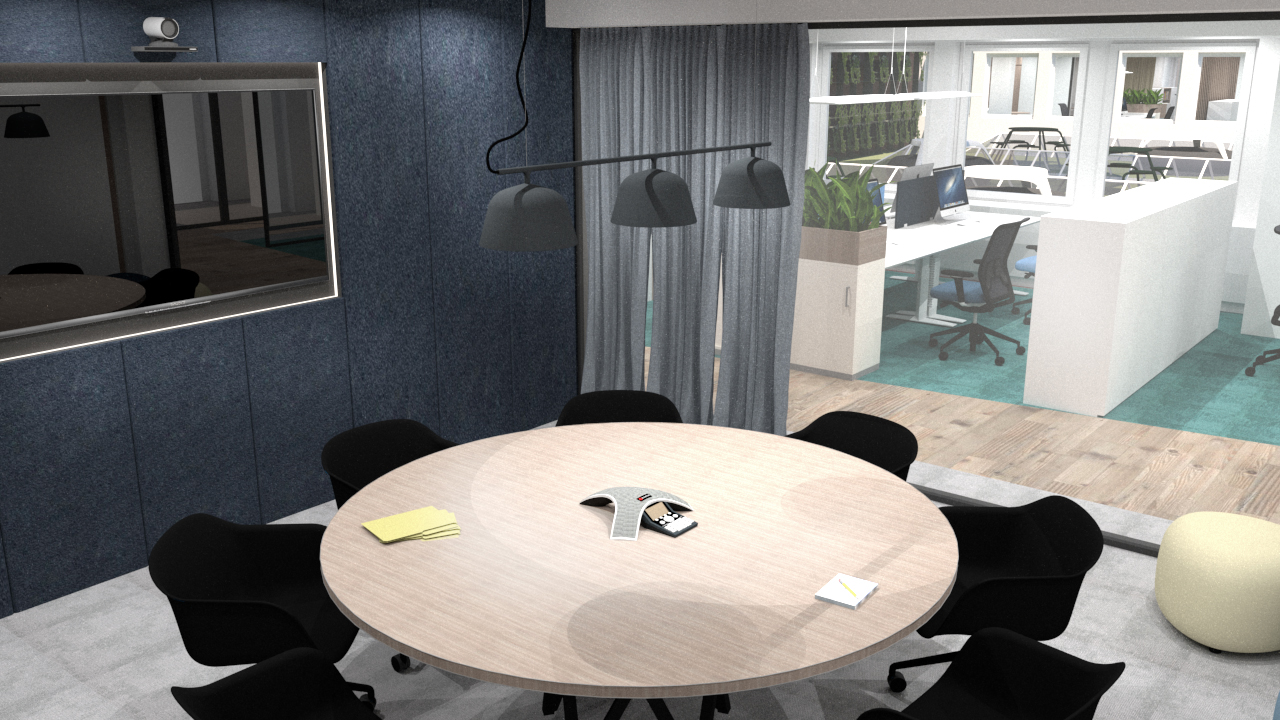
In European capitals, commercial real estate is a constant balancing act. Too expensive, too scarce, too constrained, sometimes too rigid, and yet absolutely essential to support the ambitions of contemporary organisations. In this dense and demanding context, office design is no longer a matter of comfort or aesthetics. It becomes a strategic discipline in its own right.
Optimising a workspace in a capital city means doing more with less. It means turning every available area into a useful resource, supporting productivity, improving quality of life, streamlining work, encouraging collaboration and creating a place capable of keeping pace with the rapid evolution of the working world. Even when real estate realities seem to limit all creativity, solutions do exist.
This article is intended for decision makers, space managers, operational management and stakeholders involved in transforming professional environments. It offers a clear, structured and pragmatic overview of the most effective techniques for maximising the value of offices in dense urban settings.
UNDERSTANDING THE CHALLENGES OF OFFICES IN CAPITAL CITIES
Offices, Premises and Space Scarcity
In major capitals, every square metre counts. Office buildings are often old, premises are constrained by existing architecture, and available space is becoming increasingly scarce. A small office in the city centre can represent an investment comparable to an entire floor on the outskirts.
This real estate pressure pushes organisations to reconsider their relationship with space. Every area must be designed, used and valued with precision. The smallest spaces, long overlooked, become opportunities to be intelligently leveraged through thoughtful design.
CHALLENGES OF MODERN WORK AND WORKSPACES
Hybrid Work, Remote Work and New Expectations
Work is no longer fixed. The development of remote work, the rise of hybrid usage and the search for flexibility have profoundly transformed the role of offices. They are no longer merely places of presence, but spaces for interaction, creation and coordination.
A relevant workspace today must:
• support concentration,
• encourage creativity,
• facilitate collaboration,
• offer zones adapted to different work rhythms,
• integrate harmoniously with urban constraints.
OFFICE DESIGN: RETHINKING USE BEFORE SURFACE AREA
Office layout and the design of efficient spaces
A successful office layout always starts with a detailed analysis of usage. Before any design work, it is essential to understand how teams actually occupy spaces. Too often, areas remain underused due to a lack of clarity or flexibility.
Space design follows a simple logic: adapt the environment to the work, not the other way around. This involves rethinking circulation, zone hierarchy, workstation placement and overall modularity.
SPACE OPTIMISATIN AND PRODUCTIVITY
Space optimisation as a lever for productivity
Space optimisation is not an aesthetic objective. It has a direct impact on team productivity. A well designed environment reduces unnecessary movement, limits interruptions, improves comfort and fosters engagement.
Studies show that an adapted environment measurably increases productivity while reducing cognitive fatigue. Every seat gained, every clarified zone contributes to greater collective efficiency.
OFFICE FURNITURE AND SPATIAL FLEXIBILITY
Smart office furniture and modular layout
Office furniture plays a key role in contemporary design. Modular tables, integrated storage, movable partitions and multifunctional seating make it possible to transform a space quickly without heavy investment.
A good layout relies on the ability to evolve spaces throughout the day, across projects and teams. This flexibility is particularly valuable in constrained urban offices.
DESIGN PROJECT AND COORDINATION
Structured project and effective management
Any spatial optimisation project requires rigorous coordination. From initial analysis to implementation, each step must be approached with a global perspective. A successful project is based on:
• a clear vision,
• shared objectives,
• smooth communication,
• and controlled execution.
Sometimes, a simple call is enough to align stakeholders and avoid costly blockages.
RENOVATION AND TRANSFORMATION OF EXISTING OFFICES
Smart renovation and well managed renovation projects
Office renovation is often more strategic than relocation. A well designed renovation project makes it possible to transform existing premises without interrupting operations. Even when renovation work is required, a progressive and targeted approach limits operational impact. The key lies in an evolving layout, designed to last.
LIGHTNING AND COMFORT IN THE WORKSPACE
Natural and artificial lighting in support of work
Lighting is a determining factor in comfort and performance. Good lighting improves concentration, reduces visual fatigue and directly contributes to quality of life at work.
In constrained spaces, intelligent light management can transform the perception of volumes and optimise every available area.
MEETING ROOMS & SHARED SPACES
Compact and functional meeting rooms
Meeting rooms remain essential, but their design is evolving. Compact, versatile and well integrated, they must adapt to new uses without unnecessarily monopolising space.
In urban office environments, every room must justify its existence through its actual use.
KEY CONSIDERATIONS IN OFFICE DESIGN
Key points not to overlook
Certain aspects are often underestimated: acoustics, circulation, access to services, clarity of zones. Yet these details make all the difference in the perception and effectiveness of a workspace.
OPTIMISATION EXPERTISE AND THE ROLE OF THE DECISION MAKING CENTER
Expert, urban centre and spatial intelligence
Calling on a design expert makes it possible to anticipate the constraints specific to city centres. Field experience, mastery of standards and a deep understanding of urban usage are essential to success.
WORKS, MONITORING AND CONTINUOUS IMPROVEMENT
Controlled works and adjustments over time
Optimisation never stops. After the works, regular monitoring allows usage to be adjusted, imbalances to be corrected and spaces to evolve according to real work needs.
OPTIMISE YOUR SPACES WITH MERAKI
At Meraki, we believe that every office layout can become a strategic lever. We transform urban constraints into opportunities, even in the most complex small spaces.
Our approach combines:
• spatial intelligence,
• a deep understanding of work,
• excellence in design,
• attention to detail,
• and a sustainable vision.
We create offices adapted to the reality of capital cities, designed for performance, quality of life and the future.
Your workspace deserves more than a simple adjustment.
It deserves a vision.
It deserves Meraki.